
Born Betty Charbonnet in Detroit, Mich., Charbonnet’s mother was Cajun and her father, Louisiana Creole. She spent her early childhood in New Orleans, but then came the Great Mississippi Flood, still the most destructive river flood in the history of the United States, with 27,000 square miles (70,000 sq km) of land inundated by up to 30 feet (9 m) of water over the course of several months in early 1927. With their home and business destroyed, her family relocated to Oakland, California. During World War II, Betty took a job as a file clerk for the U.S. Air Force at the shipyards in Richmond, but that fell apart because they thought she was white. She switched to doing the same job at the Richmond boilermaker’s union, and was stung by the overt racism there, too, even though everyone’s job was to support the U.S. in the war. She married Mel Reid in 1943.
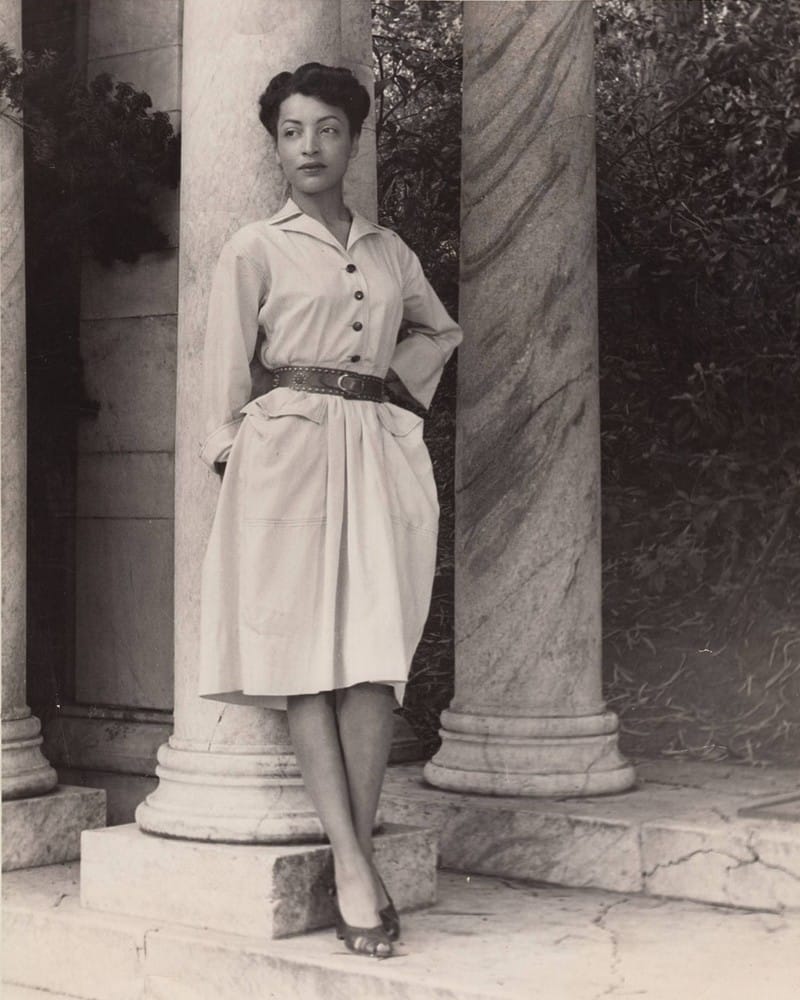
In 1945, she and her husband opened Reid’s Records, specializing in Gospel music, in nearby Berkeley. The business thrived, and in the 1950s the Reids chose to build their home in Walnut Creek, where there were better schools for their children. That prompted death threats against the couple — that was a white neighborhood. Betty, a musician herself, became known as a gifted songwriter throughout the Civil Rights Movement. She divorced Reid in 1972, marrying William Soskin, a psychology professor at the University of California, Berkeley, in 1978. About that same time, Mel took ill and died, so Betty took over running the 33-year-old record store, which continued to thrive.

Yet Betty Soskin wasn’t the sort who liked to sit around — she has lived “lots and lots of lives,” she once said. She took a job as a field representative for two members of the California State Assembly. In that capacity, because of her background in the war effort, she was tasked to help in the early planning and development of a site to memorialize the role of working women during World War II. That became the Rosie the Riveter World War II Home Front National Historical Park, established in 2000. She did not consider herself the “Rosie” type. “That really is a white woman’s story,” she said. Working outside the home wasn’t a wartime gig for Black women: her own great-grandmother was born into slavery. “What gets remembered,” she often said, “is a function of who’s in the room doing the remembering.” So as the only Black person planning the park, she made sure that Black contributions were included — she was “the only person in the room who had any reason to remember that.”
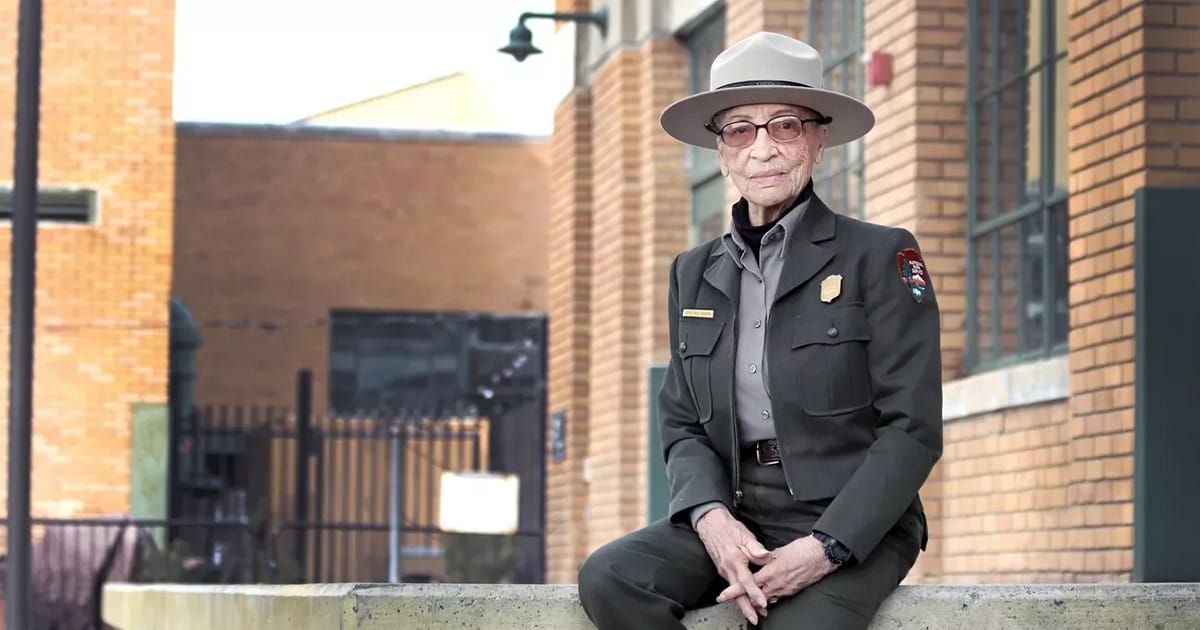
Still, Soskin was not ready to settle down — she has lived “lots and lots of lives,” she once said. In 2003, she left her state job to work at the park as a consultant, and in 2007 she took on a new role as a National Park Service ranger, working at the park. She was 85 years old. In 2018 she released her memoir, Sign My Name to Freedom (A Memoir of a Pioneering Life) [*], and if writing it wasn’t enough, she also recorded the audiobook version herself. The record store didn’t close until 2019, after nearly 75 years in business. Soskin finally retired from the National Park Service on March 31, 2022; at the time, she was the oldest serving National Park Ranger — at 100 years, 6 months, 10 days old. Soskin died at her home in Richmond on December 21. She was 104.